


Sickness and death are inevitable, but many of us will never get the chance to know exactly when our worst health ailments will strike. Someday soon, though, that might not be true for people with Alzheimer’s disease, research out today shows.
Scientists say they’ve devised a model that can narrow down the onset of Alzheimer’s, the most common form of dementia. Based on simple blood test results, they were able to predict the age, within several years, that someone would develop symptoms. In the short term, this work could improve clinical trials for Alzheimer’s, the researchers say, and down the road, it may help people at higher risk make crucial decisions about their future.
“Given the speed of progress in Alzheimer’s research, blood biomarkers, and modeling, we are hopeful that these kinds of models will be available for clinical care within the next couple of years,” study author Suzanne Schindler, an associate professor of neurology at the Washington University School of Medicine in St. Louis, told Gizmodo.
The Alzheimer’s clock
There have been important advances in Alzheimer’s research lately, including diagnosis.
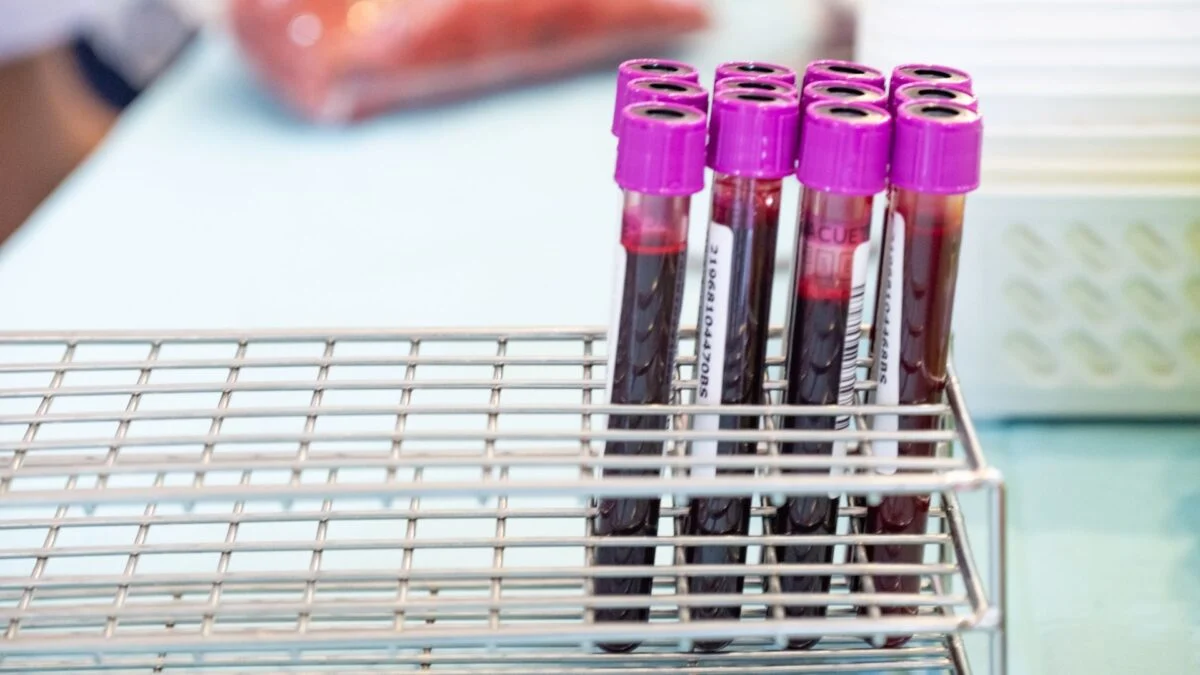
Though the foolproof test for Alzheimer’s still relies on examining the brain after death, doctors now employ several methods to diagnose the condition in living people with high accuracy, even before symptoms like memory loss appear. Last year, the Food and Drug Administration formally approved the first blood tests for diagnosing or ruling out Alzheimer’s, and still more are on the way.
These tests look for biomarkers closely linked to Alzheimer’s, such as the proteins tau and amyloid beta. In Alzheimer’s, abnormal versions of these proteins build up in the brain. One particular form of abnormal tau, called phosphorylated tau 217 (ptau217), seems to be an especially great biomarker. Since its levels in the blood track so closely with the progression of Alzheimer’s, the WashU researchers believe that ptau217 can act as a clock to predict the visible onset of the disease.
To create their model, the researchers analyzed data from two existing Alzheimer’s research projects, involving roughly 600 older people. These volunteers, who started out in good cognitive health, were given one of several blood tests measuring ptau217, including PrecivityAD2, a commercially available test developed by WashU researchers that’s in the final steps of being reviewed for FDA approval.
“In our study, we found that blood p-tau217 levels increased relatively consistently across individuals, allowing us to estimate the age that individuals became positive on the p-tau217 test,” co-author Kellen Petersen, an instructor in neurology at WashU Medicine, told Gizmodo. “This age at p-tau217 positivity was strongly associated with the age that individuals developed symptoms of Alzheimer’s.”
All in all, the team’s model could predict when someone’s p-tau217 levels would likely soon lead to visible symptoms, though within an average time window of three to four years. Notably, the gap between high p-tau217 levels and Alzheimer’s symptoms was shorter in older volunteers, suggesting that younger people can better fend off brain deterioration. The team’s model also worked with blood tests besides PrecivityAD2, indicating its potential wide usability. Their results were published Thursday in Nature Medicine.
The future of predicting Alzheimer’s
Given the current time frame of three to four years, their clock model is best used in clinical trials for now, the researchers say. But that amount of advance notice could still provide valuable insights.
“Our models will help trials select individuals who are still cognitively unimpaired but more likely to develop symptoms during the clinical trial, which would make trials more efficient,” Petersen said.
The researchers are also optimistic that incorporating data from other blood, imaging, and cognitive tests can further refine their predictions. And eventually, these models should become accurate enough that doctors and patients can use them to guide their next steps.
“For example, individuals who are far from symptom onset might choose to focus on lifestyle modification, while those close to symptom onset might be more proactive and consider participating in clinical trials,” Petersen said. The researchers are already working to improve their models, and they’ve released their code online and created a web-based app so that other research teams can try to do the same.
Right now, Alzheimer’s and other forms of dementia are incurable. But innovations like this could help us one day turn back the clock.
