


All You Need Is Kill might sound like a punch-you-in-the-face-titled new anime film brought to the U.S. by GKids to the average moviegoer, but to those in the know, the movie is actually the latest in a long line of adaptations of its source material.
Inarguably, the most popular adaptation here is Tom Cruise and Emily Blunt’s cult-classic sci-fi film Live Die Repeat, also known as Edge of Tomorrow. However, its roots go even further back than the Hollywood flick. Originally a 2003 novel by Hiroshi Sakurazaka, it was adapted into a manga by Ryosuke Takeuchi and illustrated by Death Note artist Takeshi Obata. In essence, the new adaptation’s trajectory into anime is somewhat backward, at least by traditional anime industry standards.
It follows Keiji, a foot soldier in Earth’s effort to push back an alien species, with our only recourse, awesomely, being mech suits to kill off the invasive hordes. Upon his untimely death, Keiji discovers he’s trapped in a time loop that repeats the day, with his only way out hinging on finding a way to break free. But he’s not alone. With him is humanity’s toughest soldier, Rita, who, tethered to a death loop that resets whenever either of them dies, fights (with a giant cyber axe) alongside Keiji to break out of their purgatory and win the war once and for all.
As with any work with the adage “adaptation” attached, its diehard fandom is cautiously optimistic while having reservations about seeing their baby brought to life once more by Studio 4°C (Children of the Sea). However, while fan scruples aren’t lost on Studio 4°C’s Kenichiro Akimoto, the director sat down with io9 to discuss why he felt compelled to stake his directorial debut on breathing new life into the lauded series.
Despite All You Need Is Kill being Akimoto’s first time in the director’s chair—his resume includes serving as a CG artist for the Berserk: The Golden Age Arc trilogy and as a CGI director for Netflix’s Children of the Sea—to him, taking on All You Need Is Kill boiled down to fate and “great” timing.
“I had already been talking with our president, [Eiko] Tanaka, about possibly helming a project. And at the same time, Warner Bros. put together a proposal for an All You Need Is Kill animation project,” Akimoto said. “It just happened to all work together as perfect timing.”
Time‑loop stories are often inherently about trauma, memory, and identity—and, in a case of art imitating life, All You Need Is Kill’s fandom has felt its own version of that cycle, split between purists and those resigned to the series’ lot in life as a tale so popular it’s been adapted numerous times. So while Studio 4°C’s stab at reimagining All You Need Is Kill will certainly be novel to many flocking to theaters, it faces an uphill battle with its diehards, whose community remains famously divided between pessimistic and cautiously optimistic fans awaiting how the story will change.
After all, even by Akimoto’s own estimation, the original novel’s quality is both “complete and very perfect,” while the Hollywood live-action film, for taking its concept in a slightly different direction, was still “very entertaining.” By far the most apparent change in Akimoto’s adaptation of the story is that it follows Rita rather than Keiji, a first for the series, and adds more texture to the warrior by fleshing out her backstory beyond the tough exterior that Keiji and fans encounter in other adaptations. To Akimoto, this change helped Studio 4°C to craft a brand-new All You Need Is Kill adaptation worthy of standing alongside the earlier adaptations.
“When I was put in charge of the animation, I wanted to approach it as a challenge to have our own originality into the project itself. And I know as a fan, I would have felt the same, like, ‘Wait, please don’t change it.’ But at the same time, I also wanted to create something that was different. That’s why this is the approach we took.”
Given that Studio 4°C’s film is All You Need Is Kill‘s third adaptation, Akimoto understood it would invite comparisons. Still, his hope is that the movie will not only be truer to the title’s name, both thematically and in its 3DCG action, but also capture the beauty of its dystopian sci-fi world in a way only animation can.
“I wanted to showcase something beautiful within the story,” he said, specifically noting how important Keiji and Rita become to one another despite the doomed circumstances of their initial meeting. “Even though the story and the concept are the same, I wanted to have everybody experience a different form of entertainment.”
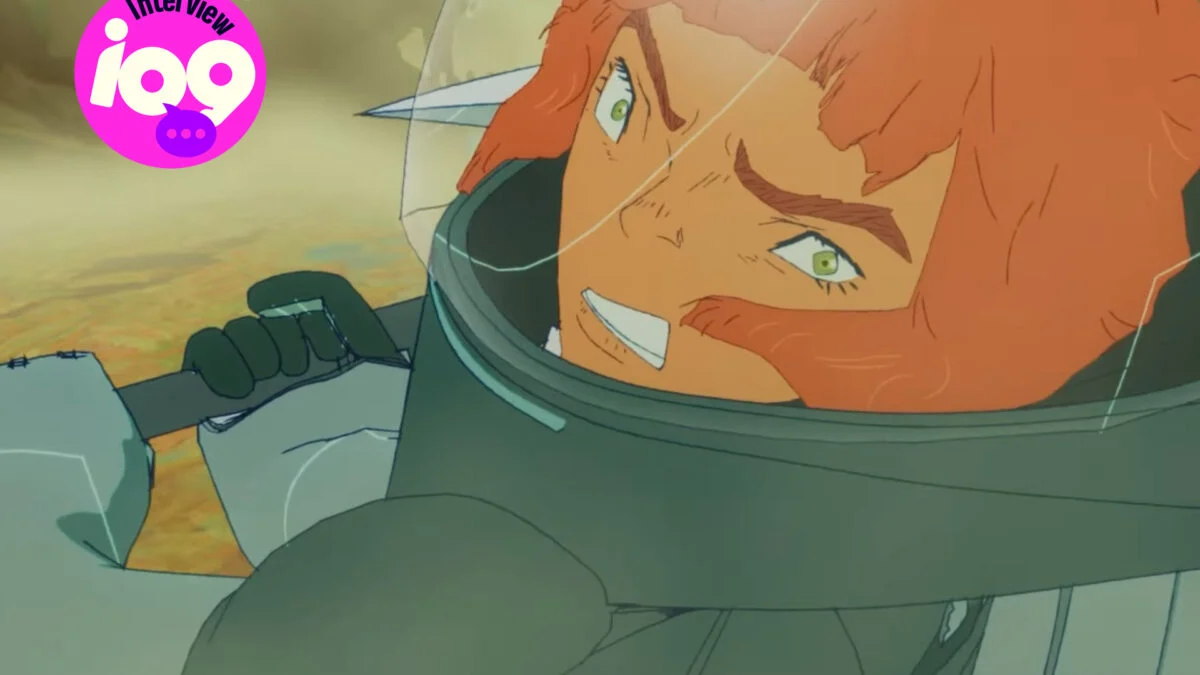
One way the film certainly differs from All You Need Is Kill’s other adaptations is its provocative, psychedelic art style. Compared with the dark, gritty look of the manga and the template-leaning sci-fi Hollywood look of the 2010s (see Elysium and District 9), Studio 4°C’s aesthetic feels like a mesmerizing, moving contradiction—one where the character models and background art are pastel, precise, and clean, yet also rough‑hewn and intriguingly scribbly. It’s kind of like if the elastic yet kinetic action of ’90s anime Crayon Shin-chan was placed smack dab in the middle of a 2D-meets-3DCG sci-fi action thriller. A sentence that goes hard for anime fans in the know.
“All You Need Is Kill” movie + artbook (Studio 4°C) are coming this friday in Japan.
Artworks >> https://t.co/MaxxjQApGl https://t.co/mLiqu14D6B pic.twitter.com/aZJoHhmzM8
— Catsuka (@catsuka) January 7, 2026
Regarding All You Need Is Kill‘s striking look, Akimoto praised character designer Izumi Murakami for slow-cooking the anime film’s unique aesthetic. In addition to serving as Akimoto’s directorial debut, the movie also marked Murakami’s first time as a character designer. Although Akimoto admitted to giving her some rough ideas for how he envisioned Rita to look in the early stages of the movie’s development, the visual palette the All You Need Is Kill audience will see in theaters is a far cry from the early suggestions he floated. Which, to Akimoto’s estimation, was for the better.
“Murakami took a lot of inspiration from movie characters, and she drew a lot of different concept art for us. Initially, the character design for Rita was very photorealistic,” he said. “But as she brushed it up, it’s like it started to become more and more flat. That’s what I really like about the design. As Murakami was working on the sketches on her own, she started to get the concept of Rita in her mind. So that’s how her character design came to life.”
© Studio 4°C
From there, Akimoto says he didn’t need to submit many requests or changes to Murakami once her distinctive, stylistic identity as Rita rippled into the rest of All You Need Is Kill. A visual tone, he says, was paramount in meshing Studio 4°C’s penchant for appealing 3D animation—a hard‑found rarity in an industry where CG is often a whipping boy, dismissed as something that never quite comes together with anime fans outside a few rare‑case studios.
“The flatness of the character design is really important in my film, because these flat characters are going to be dropped into this 3DCG animation background. If the characters are too realistic, then the contrast would be too abrupt. So I wanted to challenge myself into creating this very flat sort of animation style, and so that’s how this came to be.”
All You Need Is Kill hits theaters on January 16.
Want more io9 news? Check out when to expect the latest Marvel, Star Wars, and Star Trek releases, what’s next for the DC Universe on film and TV, and everything you need to know about the future of Doctor Who.
