


Illinois is joining a network of the World Health Organization in hopes of better positioning the state to handle potential health threats, following the U.S. withdrawal from the group last month.
It’s the state’s latest move into an area that was previously the domain of the federal government, before the administration of President Donald Trump began remaking public health policies and guidance.
The Illinois Department of Public Health this week officially joined the World Health Organization’s Global Outbreak Alert and Response Network (GOARN), which provides resources and information intended to help control outbreaks and public health emergencies around the world. California announced that it was the first state to join the network late last month.
Illinois’ decision to join GOARN follows the U.S. resigning from the World Health Organization late last month, citing the organization’s “mishandling of the COVID-19 pandemic,” a “failure to adopt urgently needed reforms” and “unfairly onerous payments” from the U.S., among other things, in an order signed by Trump a year ago initiating the withdrawal.
Many public health leaders, however, have decried the departure of the U.S. from the World Health Organization, saying it could leave the U.S. without critical information about health threats in other parts of the world.
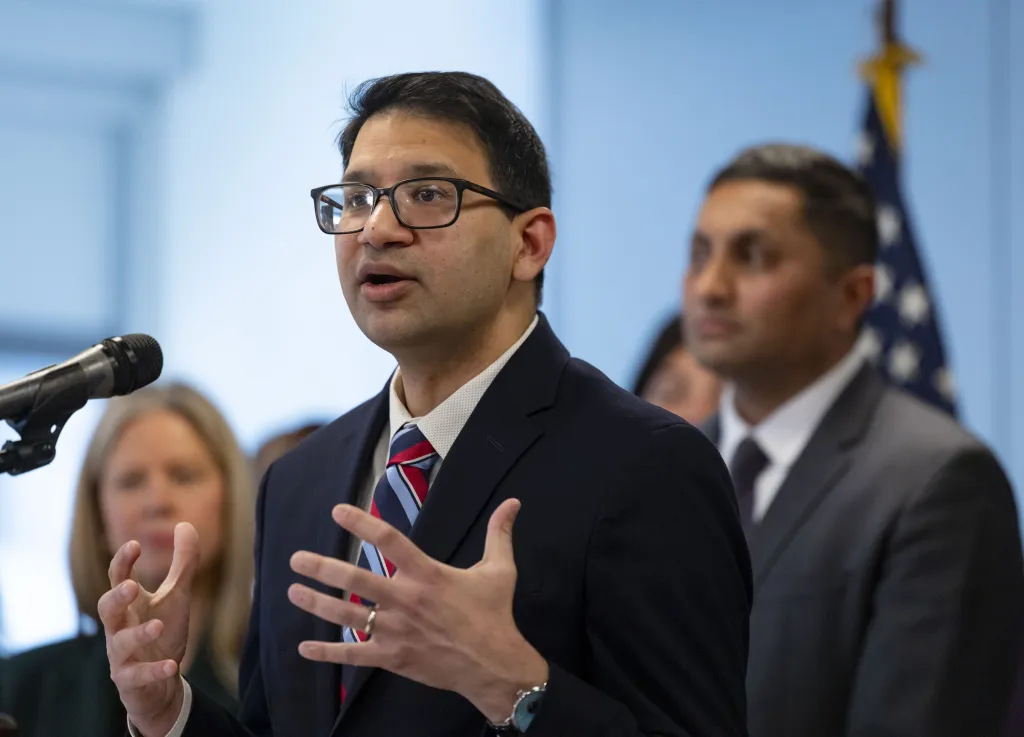
Illinois decided to join GOARN partly to keep information flowing to the state, said Dr. Sameer Vohra, director of the Illinois Department of Public Health.
“We knew this created serious concerns, really in our effort as a big state in the United States to keep our awareness and (stay) alert about potential global outbreaks and how they could impact the residents here in the state of Illinois,” Vohra said. “Part of that was the fear that we would lose access to the WHO’s global surveillance system, which would really let us know about early warnings of outbreaks.”
He noted that the information is especially important given that Illinois is home to O’Hare International Airport, one of the busiest airports in the country and a hub for international travel.
Vohra said it’s important for Illinois to have quick, up-to-date, accurate information about emerging health threats, such as a recent outbreak of the dangerous Marburg virus in Ethiopia — an outbreak that just ended last week.
“This provides the real time information to us,” Vohra said of GOARN. “Instead of waiting for the federal government to relay that, if and when that might happen, we’ll get direct access to that network of information.”
GOARN is a way for organizations and entities, such as the states of Illinois and California, to connect with the World Health Organization, which otherwise typically has nations as members.
It didn’t cost Illinois money to be part of GOARN, but Illinois had to submit a statement, as part of its application to join the network, detailing how Illinois could contribute to the group’s efforts, Vohra said. Illinois cited its access to experts and global health institutes, among other things, he said.
The White House, meanwhile, criticized Illinois’ efforts this week to join GOARN.
“The World Health Organization knowingly and deliberately lied about COVID-19 at the outset of the pandemic, and is a key reason why many countries were caught off guard,” said Kush Desai, a spokesperson for the White House, in a statement. “Illinois state officials’ insistence on maintaining access to WHO resources and information despite this gross travesty is more proof that Illinois suffers from incompetent leadership.”
President Donald Trump signs an executive order withdrawing the U.S. from the World Health Organization in the Oval Office of the White House on Jan. 20, 2025, in Washington, D.C. (Evan Vucci/AP)
The U.S. Department of Health and Human Services said in a statement, “States do not set U.S. foreign policy, and unilateral actions by individual governors that failed their own people during the pandemic do not alter this administration’s assessment of WHO’s failures or our commitment to putting the health of the American people first.”
Gov. JB Pritzker has called the U.S. exit from WHO “another reckless move by the Trump Administration that puts lives at risk” and said Illinois “will continue to work with trusted partners to protect lives and follow the science.”
The World Health Organization said in a statement last month that the U.S. withdrawal “makes both the United States and the world less safe.” The organization said it stands by its response to the COVID-19 pandemic, though “no organization or government got everything right.”
It’s likely that more states will follow the lead of Illinois and California and also join GOARN, said Dr. Tyler Evans, CEO and founder of the Wellness Equity Alliance, an organization that works to advance health equity.
“I think you’re going to increasingly see states fill in the gaps where the federal government is now lacking,” Evans said.
States are increasingly seeing that it’s necessary to join GOARN and other public health groups because without WHO, “We are now on an island of emerging communicable disease surveillance and response from the rest of the world,” Evans said.
Still, Vohra acknowledges that Illinois’ involvement in GOARN can’t make up for the country’s absence as a whole from the World Health Organization.
“We’re trying to help mitigate these harms and close gaps, but we know gaps will still remain because we don’t have that overarching federal presence,” Vohra said. “There’s only so much one state can do when the federal government makes these decisions to withdraw from the global health community.”
The U.S. withdrawal from the WHO is concerning on both local and global levels, said Dr. Mai Tuyet Pho, an infectious disease physician at UChicago Medicine.
As a doctor, Pho said she relies on information from the World Health Organization about emerging health threats when she assesses patients and decides how to care for them, such as by choosing tests and treatments.
On a global level, the resignation from the World Health Organization could create problems worldwide, given that the U.S. was a major funder of the organization, Pho said.
“While it’s great that we’ll be able to have that connection with the World Health Organization through the state, I think the departure of the U.S. from the WHO really weakens their effectiveness,” Pho said. “I can’t really understate how critical cooperative efforts and collaboration around things like pandemic and climate change are essential, and it requires funding and investment from the world.
“Our leaving as a country will really, really impact their ability to provide that essential work and coordinate that work,” Pho said. “I think it will be devastating.”
Illinois’ decision to join GOARN is the latest effort by the state to fill in gaps that state leaders say have been created by the Trump administration’s public health policies.
Pritzker signed a bill into law last year formally establishing a process for the state to issue its own vaccine guidelines, after Robert F. Kennedy Jr., head of the U.S. Department of Health and Human Services and a longtime vaccine skeptic, fired and replaced all the members of a federal vaccine advisory committee. So far, the state has broken with federal recommendations for COVID-19 and hepatitis B shots, issuing its own guidance.
Illinois also joined the Governors Public Health Alliance in October, to ensure collaboration between states on public health preparedness, and Illinois has convened its own Global Health Advisory Committee, made up of experts from the state’s leading universities who are working on strategies to respond to global health threats.
