


A startup widely known as “ChatGPT for doctors” raised a new funding round that values the company at $12 billion.
OpenEvidence, based in Cambridge, Massachusetts, closed a $250 million financing, led by Thrive Capital and DST, the company told CNBC. The startup first raised outside capital in February, when it reeled in $75 million from Sequoia at a $1 billion valuation, before its value jumped to $6 billion in October.
In less than a year, OpenEvidence has raised $700 million from investors including Google’s venture arm, Nvidia, Kleiner Perkins, David Sacks’ Craft Ventures and Mayo Clinic.
The company was founded in 2022 by Daniel Nadler, who previously built Kensho Technologies, an artificial intelligence company that was acquired by Standard & Poor’s for about $700 million in 2018. Nadler’s newest venture provides a chatbot for doctors, with its AI models having been trained on data and information from top scientific journals, Nadler said in an interview.
“‘ChatGPT for doctors’ is a useful shorthand, but what we really do is help physicians make high-stakes clinical decisions at the point of care,” Nadler said. “It’s not trained on the open internet or social media, which can introduce low-quality medical information.”
Nadler claimed OpenEvidence is the most widely used AI platform by doctors in the U.S., with more than 40% of physicians utilizing the tool. He pointed to the massive opportunity in health care, which accounts for nearly 20% of U.S. gross domestic product with $5 trillion in annual spending.
“Health care is the largest segment of the real economy,” Nadler said. “People realize there could be a lot of winners in the space.”
Those names could include OpenAI and Anthropic.
OpenAI launched “ChatGPT Health” earlier this month, while Anthropic has “Claude Healthcare.” Both are Health Insurance Portability and Accountability Act, or HIPAA, compliant extensions of their popular consumer chatbots.
While competition is emerging, Nadler said his company’s moat is its focus on physicians, quality of data and a first-mover advantage.
“We’ve already gathered hundreds of millions of real-world clinical consultations from verified physicians — that feedback loop is incredibly hard to replicate,” Nadler said. “Even if someone copied the playbook today, they’d still be far behind because it’s not just the partnerships, it’s the real-world usage data.”
Relying on advertising
OpenEvidence said it topped $100 million in annualized revenue last year, mostly fueled by organic growth. Nadler said 95% of new users hear about OpenEvidence from another physician.
“Most health care in America isn’t happening at billion-dollar hospitals in New York or San Francisco,” Nadler said. “It’s happening in small practices that don’t have IT departments or budgets for expensive software.”
OpenEvidence was one of the first AI startups to rely on advertising for revenue, which Nadler said allows faster adoption and wider use versus a paid subscription model.
Companies can pay for promotions through banner ads, badges, images, videos and other types of content on the OpenEvidence app.
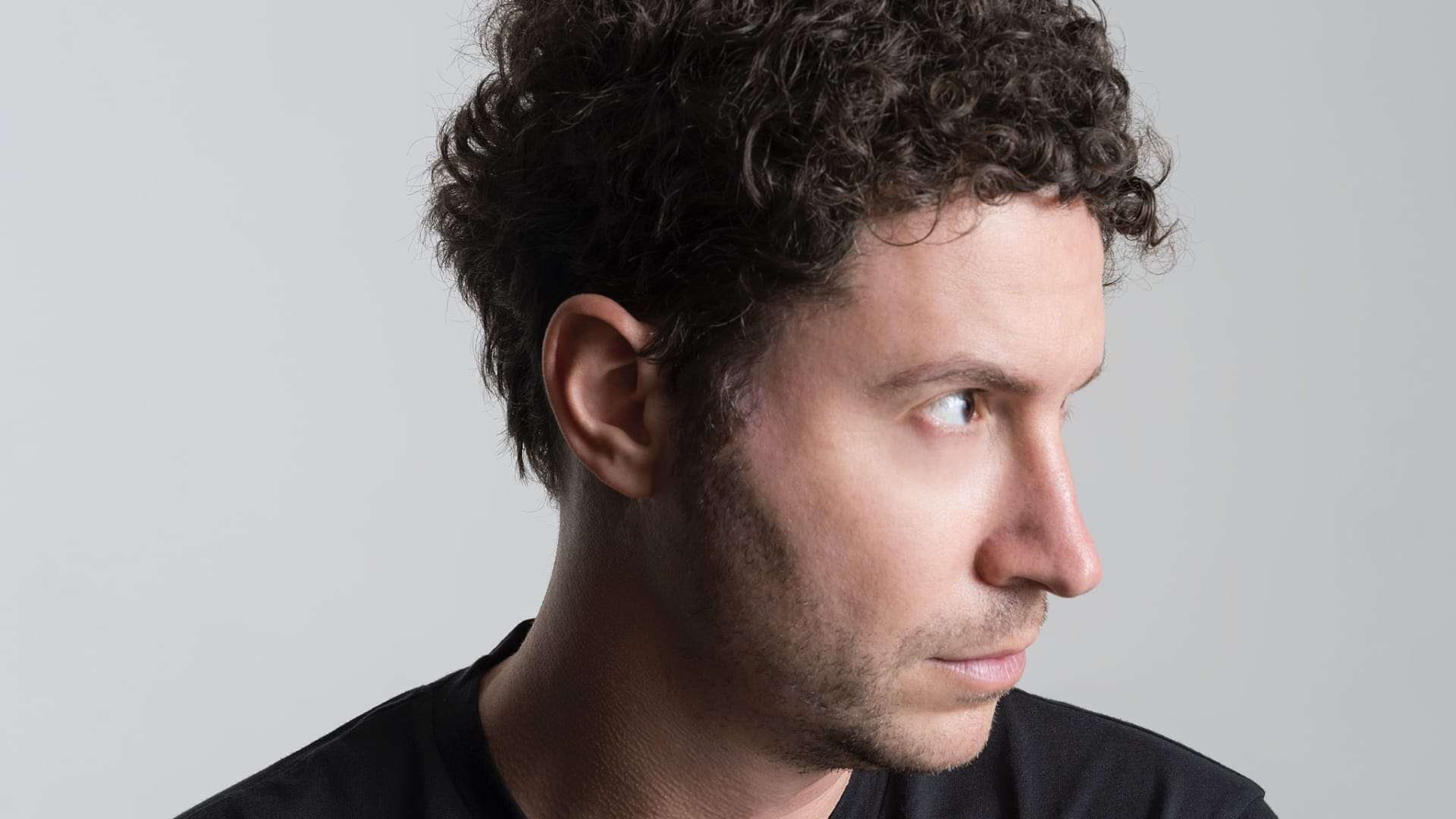
OpenEvidence CEO Daniel Nadler.
Courtesy: OpenEvidence
The artificial intelligence industry has started to warm up to ad-based revenue. Last week, OpenAI said it was testing an ad-supported version of ChatGPT. Nadler said he’s trying to be more disciplined than some companies that are “openly planning to burn billions or tens of billions over the next several years.”
“That’s a big bet, and a very risky bet,” Nadler said, adding that OpenEvidence is trying to balance growth with eventual profitability. “We’re not running this like a private equity portfolio company, but we’re also not planning on burning billions of dollars over the next year.”
AI startups are picking up this year where they left off in 2025.
In the third quarter of last year, there were six AI funding rounds of more than $1 billion, according to CB Insights. Anthropic is in talks to raise an additional $10 billion as of January, while Elon Musk’s xAI announced a $20 billion round this month.
Nadler said that with the big tech companies aggressively pursuing acquisitions in the space, he’s felt the pressure, but has remained set on building OpenEvidence as a stand-alone company.
“I’ve done the acquisition route before,” he said. “It can be great. But this time, I want to build something that compounds over many years.”
As for an initial public offering, he said SpaceX, OpenAI and Anthropic, which have all been rumored to be potential 2026 candidates, need to go public first.
“There’s an order to nature,” Nadler said. “Foundation model companies go public first. Then the application layer follows. That’s how the internet played out, and that’s how this cycle will play out, too.”
WATCH: OpenAI investor letter
