


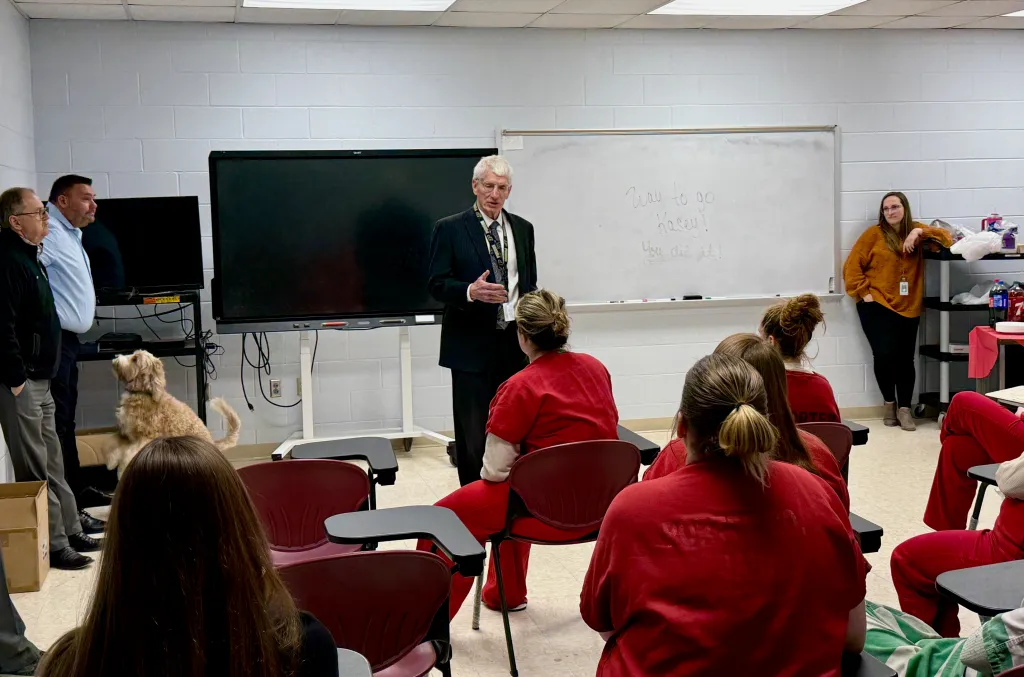
The Porter County Jail lost grant funding for its longtime Chemical Dependency and Addictions program, but the clinic providing the program remained committed to making sure it continued and the Porter County Council approved the necessary funding, Sheriff Jeff Balon said in a release.
“The Porter County Jail will lose the state funding grant in 2026 due to cutbacks that paid for the NorthShore services and two salaries for case managers in the jail. However, NorthShore was able to remain committed to ensuring the jail programs were able to continue and the Porter County Council approved funding to pay for the salaries of the two case managers,” Balon said in the release.
Porter County Sheriff Jeff Balon. (Porter County Sheriff’s Department)
CDA is a 12-week substance use disorder treatment program for men and women that is facilitated by two counselors from NorthShore Health Centers. Participants attend class three days a week and learn how to develop skills to manage stress, anger, cravings and triggers.
CDA has been a staple of the county’s jail programs since the Sheriff’s Office moved to its current location in 2002. With just under 300 people graduating from the program in 2025, CDA has touched thousands of lives in 23 years, according to the release.
“CDA training is vital for the men and women who are incarcerated at the Porter County Jail. Substance use disorders are often tied to the actions that lead to incarceration. By having in-depth programs such as CDA, it assists the individuals in understanding the science of addiction, helps to develop practical coping skills to reduce relapse and impulsive decision-making, and it also helps the person recognize triggers that cause relapse,” Balon said in the release.
“CDA also provides a realistic path towards successful reentry into the community through various means. A person who learns the coping skills to recovery and reenters into the community has a higher success rate to a productive life after incarceration. In all, this will improve public safety by reducing repeat offenses, lowering overdose risk upon release and build healthier communities.”
