


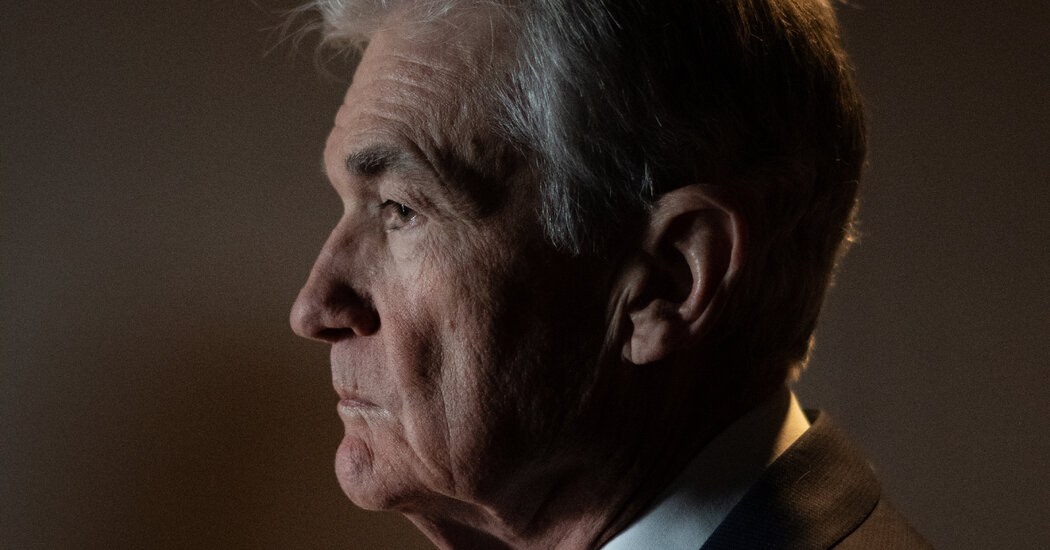
“Jay is going to do what he believes is right, irrespective of pressure from the president,” added Michael Boskin, who served as chair of the Council of Economic Advisers under George H.W. Bush and has known Mr. Powell for over three decades. Mr. Boskin said that included how Mr. Powell would approach setting rates in his remaining months as chair, “even though the natural human reaction might be to just oppose what Trump wants.”
The stakes are high for all involved.
If he stays on, Mr. Powell could be a major impediment to the president’s desire for lower borrowing costs. The Fed chair has just one vote on the 12-person policy-setting committee, meaning whomever Mr. Trump chooses will have to persuade the other members to get on board with what they support. Neel T. Kashkari, president of the Federal Reserve Bank of Minneapolis, said in an interview this week that the next chair will need to “bring forward the best arguments that he or she can, and then win the votes.”
Mr. Powell’s presence would no doubt make it difficult for the next Fed chair to lead the central bank with authority. Mr. Trump had narrowed in on his pick, with Kevin A. Hassett, a top economic adviser, emerging as a front-runner. But the blowback from the investigation appeared to change the president’s thinking, perhaps in recognition that someone perceived as too close to the White House would struggle to assert independence.
On Friday, Mr. Trump said to Mr. Hassett at a health care event, “I actually want to keep you where you are, if you want to know the truth,” as he pointed out how effective his economic adviser is on TV in promoting the administration’s agenda.
“I would lose you,” he added. “It’s a serious concern to me.”
Uncertainty over who will lead the Fed, especially if that is complicated by Mr. Powell’s sticking around, risks making it harder for the central bank to communicate its policy views effectively. But if the Fed’s independence is indeed in jeopardy, Mr. Powell is likely to see that as a necessary cost.
“He’s not just fighting for himself,” Anil Kashyap, an economist at the University of Chicago’s Booth School of Business, said of Mr. Powell. “He’s fighting for others who might be in this position. He’s fighting for the legacy of the people who came before him. Dying on the hill of monetary policy independence is probably the right place to go out on.”
