


If you have a lemonade stand, and I give you $1 as an investment, and you agree to say I just bought 0.0000000000001% of your lemonade stand, did you and I just make history by creating the world’s first $1 quadrillion company?
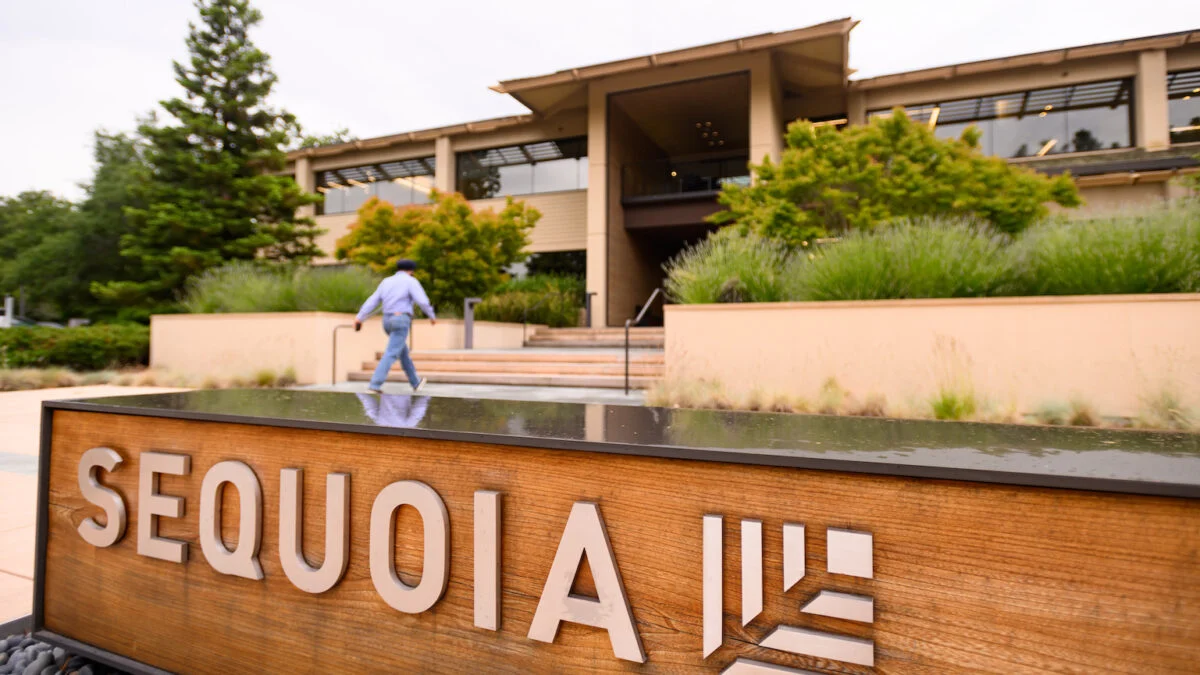
No, that’s silly. We might agree to the terms, but a market involves other people, and if they don’t think the economics of our deal make sense, the transaction was not much of a “price discovery” event after all. You can go around saying your lemonade stand is worth $1 quadrillion if you want, but that doesn’t mean Sequoia Capital is going to give you a capital injection on the basis of that valuation.
Anyway, the Wall Street Journal has a new story fretting over a tactic for setting valuations of AI companies in Silicon Valley. It’s not exactly like my lemonade stand example, but it’s helpful to keep that in mind. The Journal’s reporting is informed by anonymous people with insider knowledge of these investments.
The pattern outlined is that two or more parties invest in a company essentially at the same time, but at drastically different prices. For instance, according to the Journal, a startup called Serval made a deal with Sequoia late last year that turned Serval into a $400 million company. Then, for reasons unknown, some other parties delivered a funding round “days later” that valued Serval at over $1 billion—a unicorn appears!
The Journal claims another company called Aaru, achieved the $1 billion milestone by offering investment “tiers” with different economics. On paper, half of the investors valued the company at $450 million, and the other half valued it at $1 billion. The different terms, and god knows what other factors, made the different valuations feel right in the minds of the various investors for their various unknown reasons.
About 20 deals of this nature have occurred in the past six months to a year, the Journal claims.
Venture capitalist Chris Douvos of AHOY Capital told the Journal that this practice “absolutely does inflate valuations.” The technique is used, in Douvos’s assessment, to “anoint a winner and suck all the air out of the room.”
So imagine a famous venture capital company called Refreshment Capital investing in your lemonade stand. You need supplies, so you ask for $500, and they counter that they’re thinking of giving you $100 for 10% of your company, valuing your lemonade stand at $1,000. But first, Refreshment Capital says you should use their famous name to convince the librarian down the street to invest a measly $20 after Refreshment Capital’s check clears. But the librarian will only get 1% of your company for $20, valuing your lemonade stand at $2,000.
You get $120 for lemons and sugar. The librarian gets exposure to a prestigious Refreshment Capital-funded company. And Refreshment Capital doubles its investment almost instantaneously.
The question is, in your mind what feels like the truest price discovery event in this story? The librarian’s investment? Refreshment Capital’s investment? Or perhaps none of the above?
