


Black History Month provides the opportunity to reflect on the countless positive contributions Black Americans have made to the world. Below Black voices from the south suburbs share their thoughts on who have been, for them, among the most inspirational deceased and living African American history makers.
Jada Curry
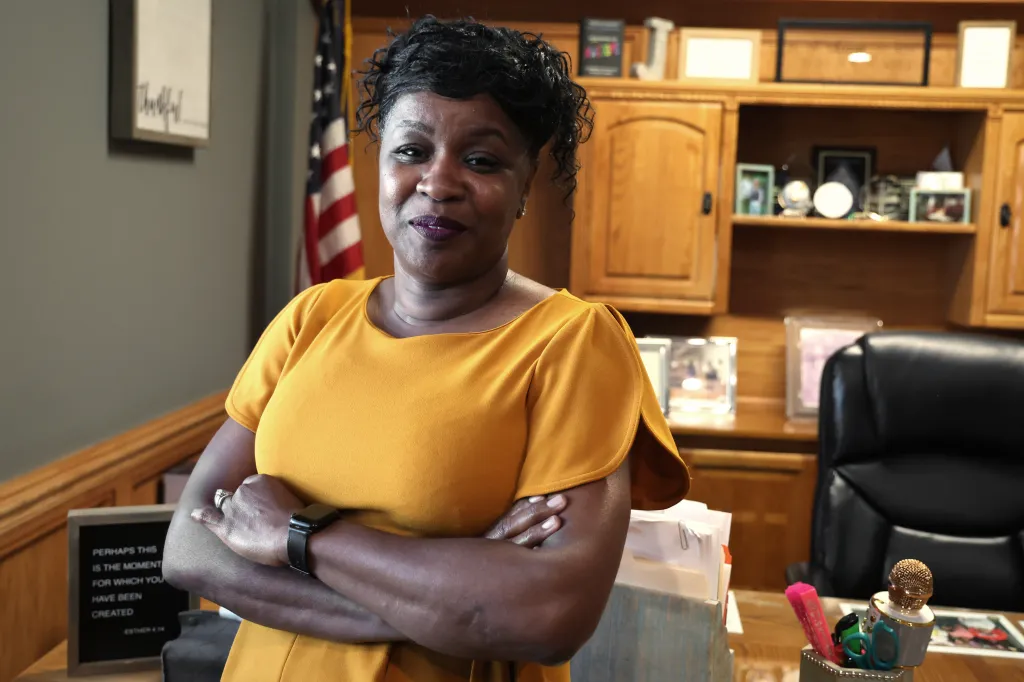
Lynwood Mayor Jada Curry draws inspiration from the late U.S. Rep. Shirley Chisholm.
“Her boldness and willingness to run for Congress and become the first Black woman elected to Congress serves as the foundation for someone like me, who took a leap of faith and became the first Black, female Mayor of Lynwood,” Curry said. “Her famous quote, ‘You don’t make progress by standing on the sidelines, whimpering and complaining. You make progress by implementing ideas,’ continues to be the motivation for my willingness to serve.”
Curry also draws inspiration from civil rights advocate Ruby Bridges, the first Black child to attend an all-white school in the south who had to be accompanied by U.S. marshals.
Bridges is now an author who has traveled the world sharing her story and whose Ruby Bridges Foundation’s mission is to empower young minds, inspire change and promote equality in education. Curry heard her speak at a conference.
“I was fascinated by the fact that although she was a child when she became the first African American student to attend William Frantz Elementary School, she completely understands as an adult the weight of that boldness,” Curry said. “Her foundation continues to promote the values of tolerance, respect and appreciation of all differences. In this current climate, we need all that Ruby stands for if we are truly going to make a difference in this world.”
Alonzo Abron Jr.
For Alonzo Abron Jr., CEO of A. Progeny Global, an Oak Forest-based full-service real estate firm, inspiration has come from the late entrepreneur and philanthropist Arthur George Gaston Sr. In the face of discrimination in the deep south, Gaston, the grandson of a slave, built one of the most successful business empires addressing needs he saw in the Black community.
Alonzo Abron Jr., CEO of A. Progeny Global, an Oak Forest-based full-service real estate firm. (Alonzo Abron Jr.)
“His legacy reflects how I believe real change is built,” said Abron. “Gaston didn’t seek the spotlight. He built systems. At a time when Black business ownership itself was radical, he quietly created banks, insurance companies, construction firms and real estate that provided stability, opportunity and leverage for thousands of people.”
Abron also is inspired by billionaire Robert F. Smith, founder, chairman and CEO of private equity firm Vista Equity Partners. Abron said Smith built private-equity infrastructure, technology platforms and capital engines while deliberately reinvesting in education, workforce development and community capacity building.
“Though separated by generations, both men focused on control, governance and durability rather than applause, understanding that lasting influence comes from owning and managing the systems that expand opportunity for people and communities alike,” he said.
Lisa Green
Dr. Lisa Green, CEO and co-founder of Harvey-based Family Christian Health Center, is inspired by the late musical icon and opera singer Marian Anderson as well as pioneering engineer Marian Croak, a vice president of engineering at Google.
Dr. Lisa Green, CEO and founder of Family Christian Health Center
“Marian Anderson has always inspired me, partly because my parents were both history enthusiasts, and she was one of my mother’s favorites,” Green said. “I didn’t fully understand why until I was older. As I learned more about her life, I realized that she used her voice literally and figuratively to create change on a national and global scale.”
In 1939, after being denied the chance to perform at Constitution Hall because of her race, Anderson sang on the steps of the Lincoln Memorial on Easter Sunday, and that performance drew one of the first large, integrated audiences in American history, Green noted.
In 1955, Anderson became the first African American to sing a leading role at the Metropolitan Opera, “proving that talent and dignity could transcend prejudice,” Green said.
Present day history maker Croak is the embodiment of innovation, resilience and humility, Green said.
“Many people don’t know her name, yet her work shapes how the world communicates,” Green said. “She is a powerhouse, an engineer and inventor best known for pioneering Voice over Internet Protocol, the technology that makes modern internet calling, video conferencing and global communication possible.”
What inspires Green the most about Croak’s journey is that it wasn’t an easy one.
“Despite struggling with aspects of technology earlier in life, she went on to file more than 200 patents and helped advance digital communication in ways that changed everyday life,” said Green.
Green noted Croak also led the development of text-to-donate systems — technology that raised millions of dollars for disaster relief efforts.
Gail Howard Johnson
The late civil rights activist Bayard Rustin, a key adviser to the Rev. Martin Luther King Jr., has been a source of inspiration for Crete resident and retiree Gail Howard Johnson. She is Black history coordinator at Lynwood-based Living Grace Church and a former family educator for the Illinois Department of Children and Family Services.
Gail Howard Johnson, a retiree, Crete resident, Black History coordinator at Lynwood-based Living Grace Church and a former family educator for the Illinois Department of Children and Family Services. (Gail Howard Johnson)
Johnson was privileged to meet Rustin many years ago when she was a sophomore at St. Elizabeth High School in Chicago and selected to attend a Black History Roundtable program. He was one of the speakers at one of the sessions, she said.
“I did not know his importance at that time to the Civil Rights Movement or his critical relationship to Dr. Martin Luther King Jr.,” said Johnson. “He spoke about civil rights and the importance of economic freedom for Black people.”
Johnson said she later learned Rustin had studied the nonviolent teachings of Mahatma Gandhi, which he shared with King and that it was Rustin who came up with the idea for and led the organizing effort for the 1963 March on Washington.
She also cites former President Barack Obama as a source of inspiration.
“He represents the culmination of centuries of the Black struggle,” Johnson said. “President Obama showed what excellence in the White House that Black people built looked like. He opened the door for other young Black children to be able to follow in his footsteps.”
Rashidah Muhammad
The late novelist Toni Morrison, winner of the 1993 Nobel Prize in Literature, is a “shero” for Rashidah Muhammad, professor of English and secondary education at Governors State University.
Rashidah Muhammad, professor of English and secondary education at Governors State University. (Governors State University)
“One of the things that really captures me about her writing is her ability to put us in a scene historically,” as well as her focus on helping readers understand all sides, said Muhammad
She also points to Obama as a source of inspiration as the nation’s first Black President.
“He honors all people and celebrates diversity, celebrates inclusion. He continues to be at the forefront of what we need to do to challenge leaders in this country that don’t want to include people. He’s my living hero.”
Francine Knowles, at Fknowles.writer@gmail.com, is a freelance columnist for the Daily Southtown.
