


Chris Gabehart said in a Wednesday legal filing that the lawsuit against him by former employer Joe Gibbs Racing isn’t about protecting trade secrets but instead ‘punishing a former employee for daring to leave.’
And while less seemingly less consequential on the merits of the lawsuit itself, Gabehart also revealed his reasons for leaving Joe Gibbs Racing in the first place by citing a culture of dysfunction with driver Ty Gibbs at the center of the tension.
Advertisement
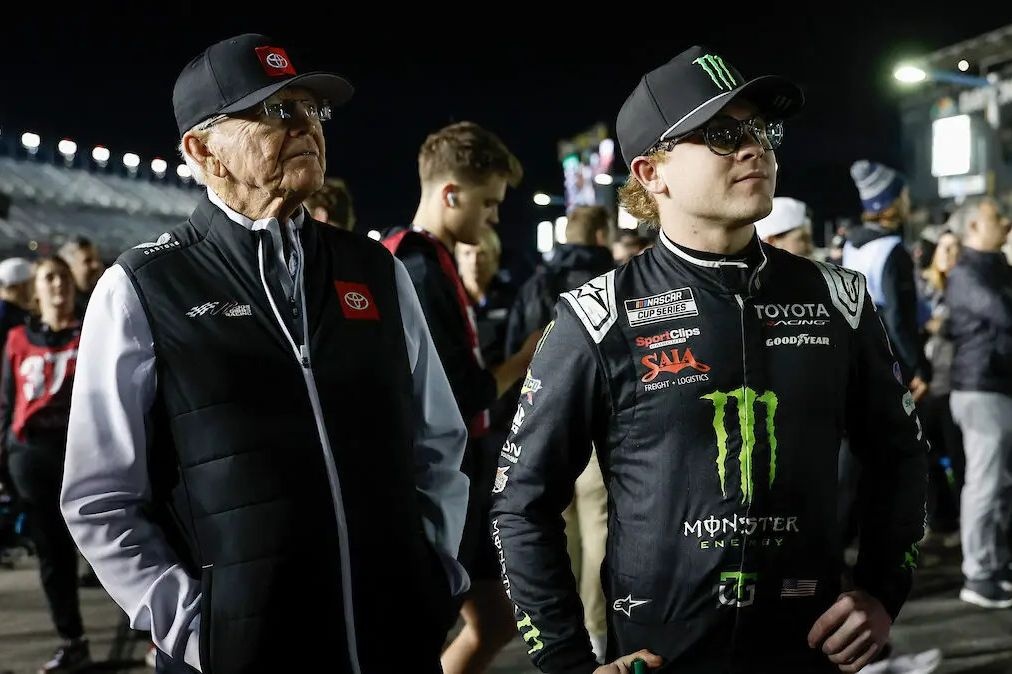
Ty Gibbs is the grandson of team owner Joe Gibbs.
Joe Gibbs Racing sued Gabehart last week, seeking damages of over $8 million dollars, for allegedly embarking on a ‘brazen scheme to steal JGR’s most sensitive data’ and take it with him to Spire Motorsports, which hired him last week as Chief Motorsports Officer. JGR amended the suit to include Spire as a defendant on Tuesday.
Prior to joining Spire, Gabehart served as competition director for Joe Gibbs Racing in 2025 in his 13th season with the organization, with stops as an engineer and crew chief prior to his most recent assignment.
Advertisement
Joe Gibbs Racing also filed a restraining order and motion for injunctive relief to prevent Gabehart from working at Spire. An initial hearing has been scheduled at the Western District of North Carolina court on Friday.
As for why Gabehart left, the italicized below text taken directly from the filing indicates a culture of dysfunction, that ultimately contributed to him not being able to do the job he felt he had accepted.
“I notified JGR that the job was not, at all, as advertised. I was promised a COO-type role overseeing all competitive operations with autonomy to lead. Instead, I found myself constantly intertwined with Coach (Joe) Gibbs, senior JGR executives, and family members when making even routine competition decisions—a dysfunctional organizational structure that I could not continue in.”
Advertisement
Gabehart said Coach Gibbs overseeing the No. 54 car driven by his grandson undermined his role as competition director and that he was pressured to take over as crew chief for the 23-year-old driver. He says that the family, which not cited by name, includes Ty’s mother and JGR COO Heather, took an increasingly hands-on role with the No. 54 car that did not align with Gabehart’s duties.
“It was my view that the No. 54 car should be managed and held accountable in the same manner as the organization’s other cars. Instead, the No. 54 car was managed directly by Coach Gibbs and everyone in the organization knew it.
Beginning early in the 2025 season, Coach Gibbs repeatedly pressured me to take over as crew chief of the No. 54 car. I consistently declined, explaining that as Competition Director, I did not believe this was the right move, that it would undermine the long-term development of the team, and that I did not want to be crew chief of the No. 54 or any other car. Despite my objections, Coach Gibbs and ownership continued pressing, and I eventually conceded to the pressure by first helping the No. 54 team more behind the scenes and then, beginning on June 28, 2025, by publicly serving as the crew chief and calling the races on Sundays for nine consecutive races before returning those duties to the original crew chief, Tyler Allen, against the strong desires of ownership, when I made it clear that I did not want to serve as a crew chief for the long term.”
Advertisement
Gabehart said decisions relating to the No. 54 car were made without his ‘counsel or input’ and that the driver, Ty Gibbs’ was not held to the same competition meeting attendance standards as Christopher Bell, Chase Briscoe and Denny Hamlin.
On November 6, Gaebhart was granted a meeting with Coach Gibbs to discuss the schism and that they agreed that a parting of ways would be most amendable. Gabehart says JGR stopped paying him in November while he negotiated departure terms with the organization.
JGR has since sued Gabehart, claiming over $8 million dollars in damages and the potential for further harm if the former competition director continues to work in a organizational leadership capacity at Spire Motorsports.
Advertisement
For his part, Gabehart wrote that he paid for his own forensic audit and it showed ‘no evidence I transmitted, distributed, used or otherwise shared any JGR confidential information. No text messages. No email attachments. No dissemination whatsoever.’ Gabehart shared a letter (below) that shows a willingness from Spire Motorsports to also subject itself to an audit to show that it had not received nor used JGR proprietary data.
Gabehart says that letter went ignored and JGR chose instead to sue. The lawsuit claims Gabehart made a folder on his JGR account titled ‘Spire’ and synced it with his personal accounts.
Gabehart did not deny that but stated the folder was for the purposes of evaluating the decision to leave JGR for the rival race team.
Advertisement
“This lawsuit is not about protecting trade secrets—it is about punishing a former employee for daring to leave.
“Granting injunctive relief and preventing me from working in NASCAR, where I have dedicated my entire career, would deprive me of my livelihood and ability to work in my chosen profession. Granting the injunctive relief requested by JGR would effectively bar me from pursuing my livelihood in the only industry in which I have developed expertise over the course of my professional career.”
The complete legal response to the lawsuit by Chris Gabehart can be found below.
2 25 2026 Gaberhart Declaration by mattweavermedia
To read more Motorsport.com articles visit our website.
